89 €
119 €
Available
Description
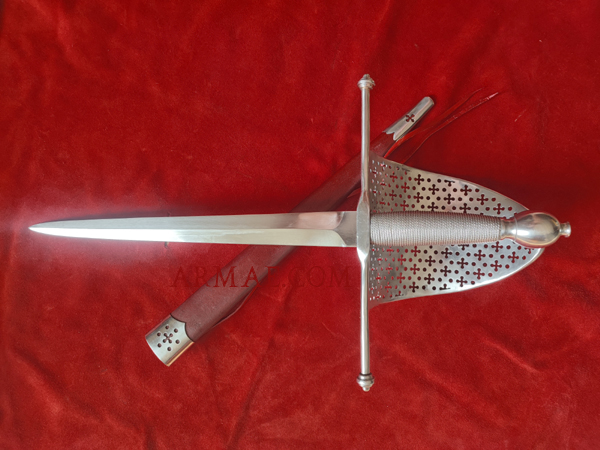
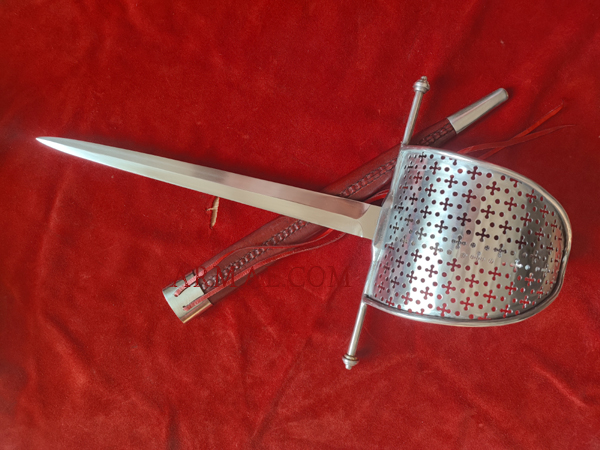
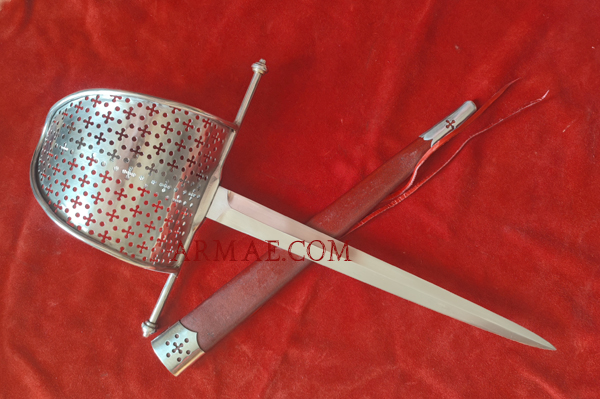
The left hand went hand in hand with the rapier wielded in the right. It was used to parry the opponent’s sword blows and to deliver deadly thrusts in close combat. Failing that, fencers would wrap their cloak around the left arm to ward off the opposing.
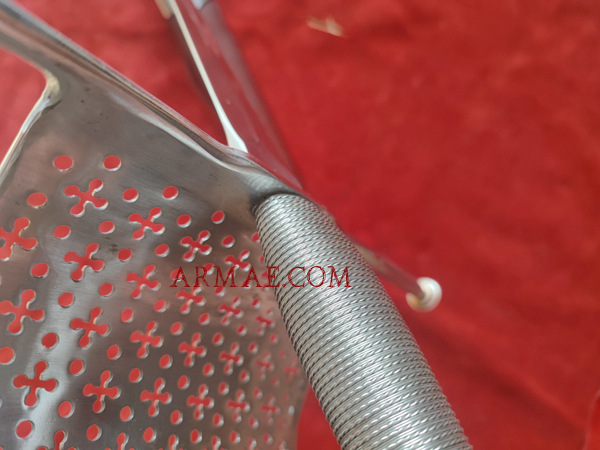
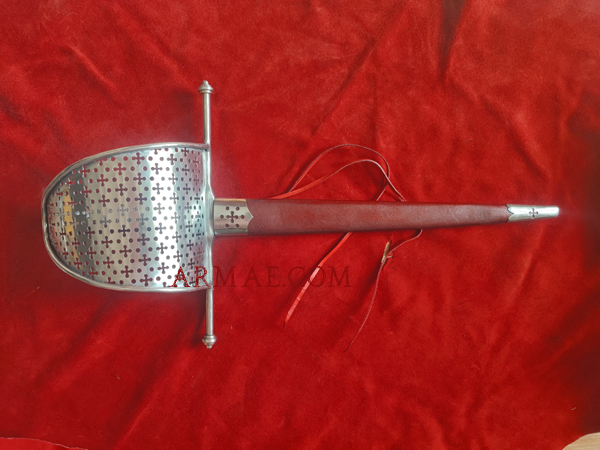
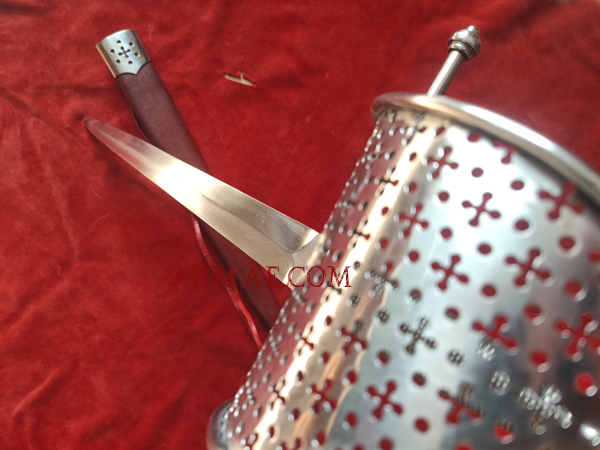
Blade in hardened carbon steel. Hilt wrapped with twisted steel filigree wire. Wooden scabbard covered in leather, with iron fittings. Length: 46.5 cm, including a 30.5 cm blade. Blade width: 3 cm. Total weight (without scabbard): 680 g.
×
All these weapons have steel blades, but are not intended for fencing, unless otherwise specified.
It is reminded that the sale of bladed weapons to minors is prohibited, and that even though our reproductions are primarily intended for decoration or historical reenactment, their acquisition is reserved exclusively to adults.