If
we do not find the item you need, please contact us, for we may have
it made for you. Do not forget to have a look at our special
offers section, too ! |
|
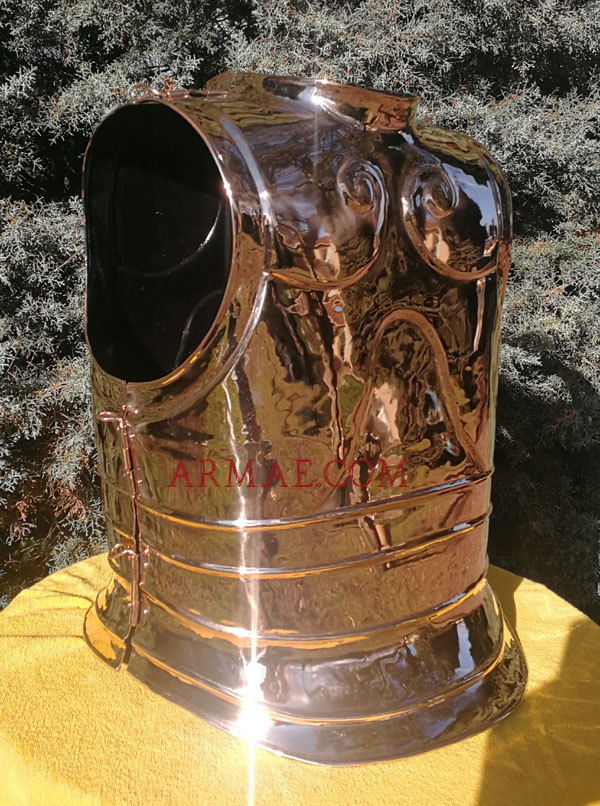
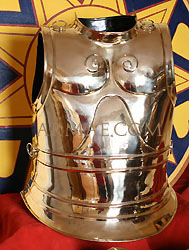
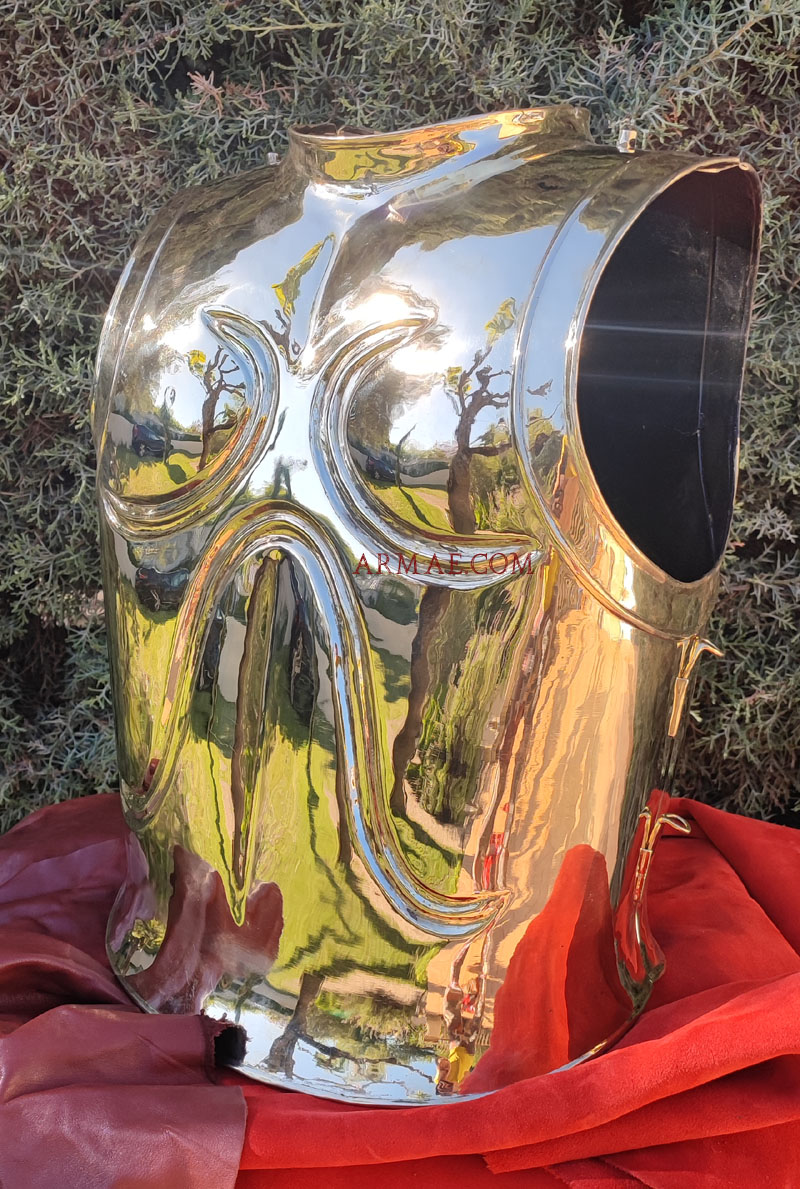
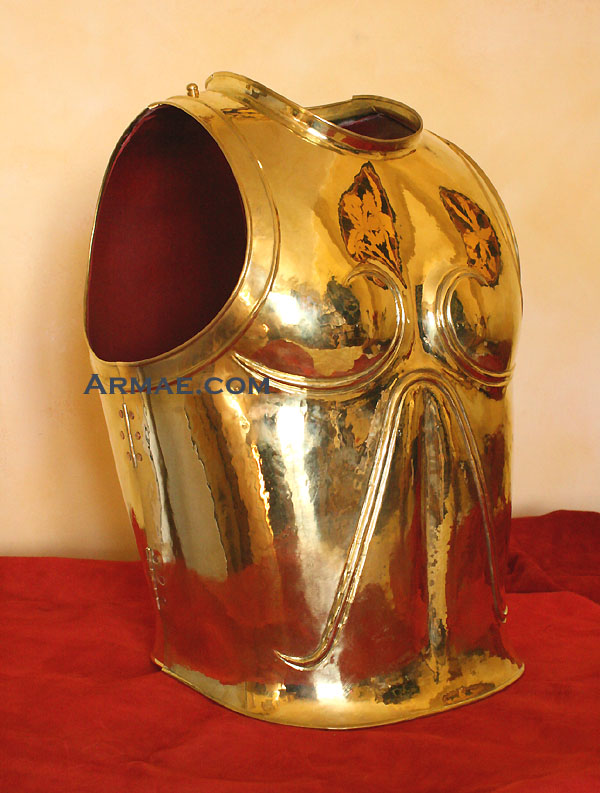
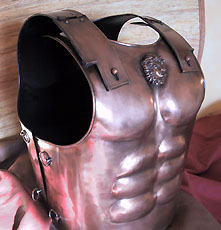
The greek hoplites began wearing plate armor very early, and this kind of body armor was used until the end of the hellenistic period. Roman officers used to wear them until the end of the roman empire. This reproduction is made of brass. Closed on the sides by bonds. An articulated plate closes it at shoulder's level. Weigth about 3kg. |
|
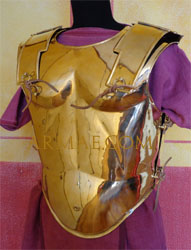
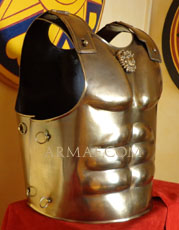
This reproduction is relatively short, ending at navel's level, thus indicating a horseman armor. Made of iron, with a bronze finish. Closed on the sides by bonds. An articulated plate closes it at shoulder's level. Weigth about 2.5kg |
|
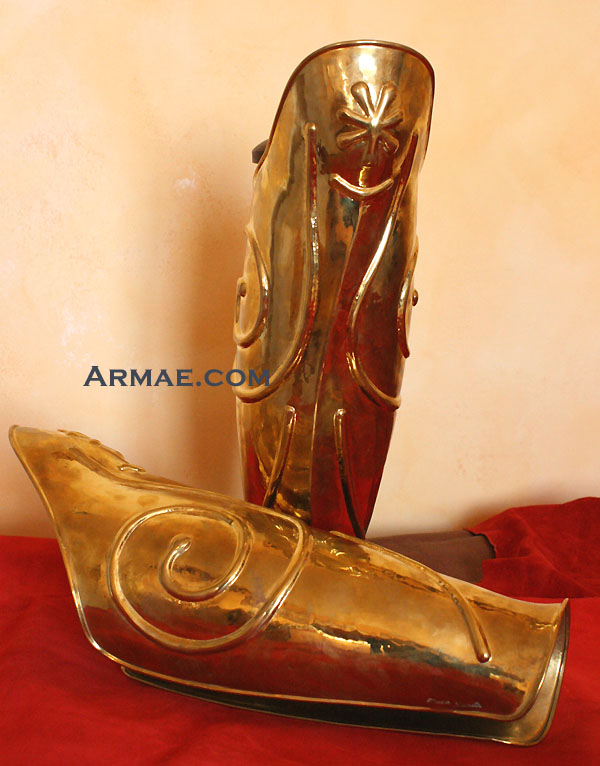
The greek hoplite
had to protect his legs which were not covered by his big round shield.
He therefore equipped himself with greaves. They were usually made of
bronze, thick enough to protect the warrior but thin enough to be opened
to put them on. |
|
AC141
- Brass leg armor - 120€ - Pictures |
|
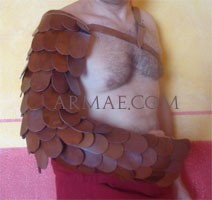
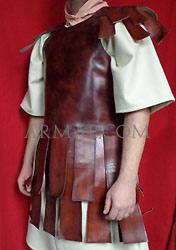
This leather "muscle" cuirass is hypothetical, for none was ever found. It is much more confortable than its brass brother, though, and is top be seen in most sixties peplum movies.
|
|
AC121
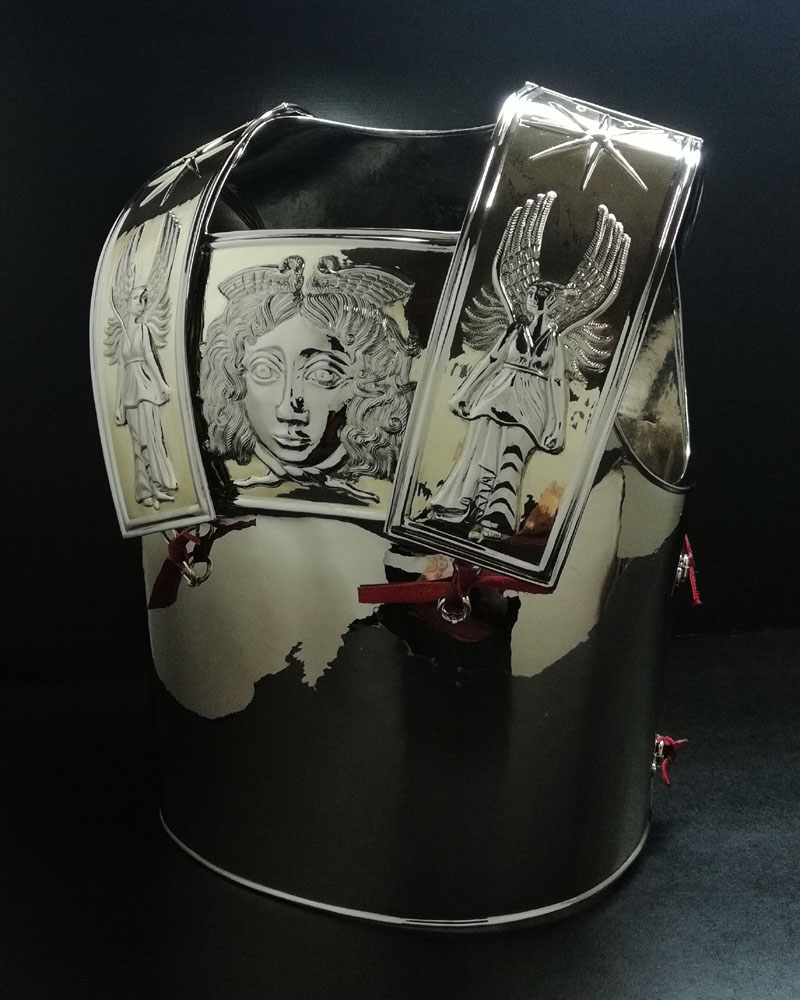
- Thorax (brass) - 250€ - Pictures The main difference between this armor and our AC125 thorax is the material used : it is made of brass. It os a bit longer, too, and more decorated. The two halves are closed by putting pins in the side and top hinges. |
|
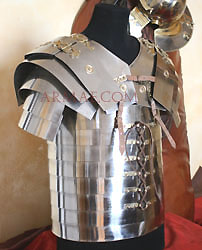
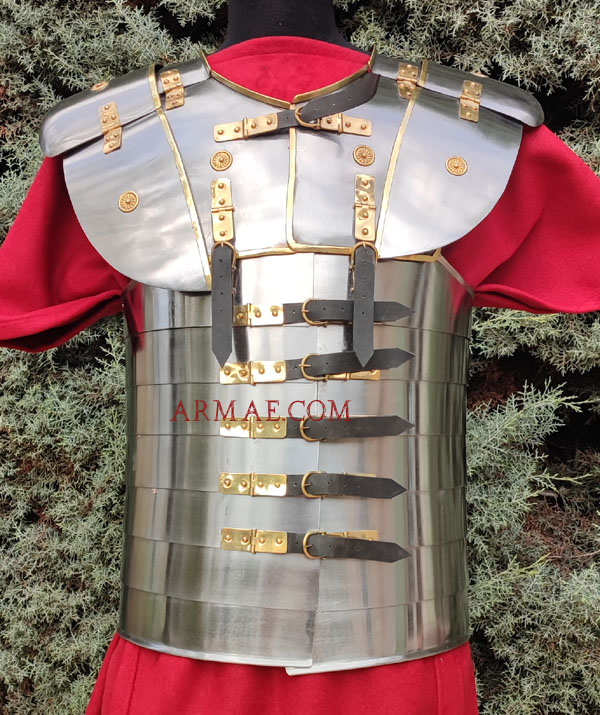
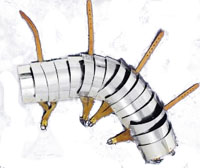
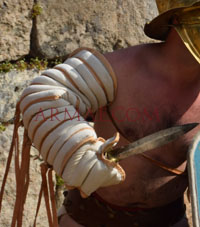
Reproduction of a "Corbridge" type (Ist century). Also available, arm protection called manica, AC150A, 70€. You may order a lorica segmentata made of stainless steel plates, too : AC150I price 220€.
|
|
A lot of different chainmail patterns are available, with 6mm or 8mm rings, rivetted or not, galvanized or not, for roman legionnarioes or gallic warriors... |
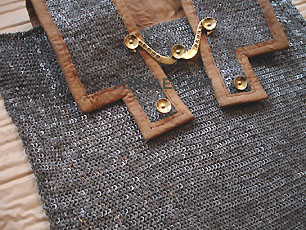
| AM161 - Lorica Hamata, 6mm iron rivetted flat rings with washers, - 499€ - Pictures This chainmail is made of 6mm steel riveted rings with washers - the most accurate ones for roman re-enactors. The shape is the one in use during the first century, and the beginning of the second. The
main advantage of this mail is its historical accuracy. The use of steel
instead of normal iron allows to gain on weigth : its weigths is almost
the half oof any "classical" mail one. |
|
Heigth 55cm, width 15cm then10cm. 1kg each |
|
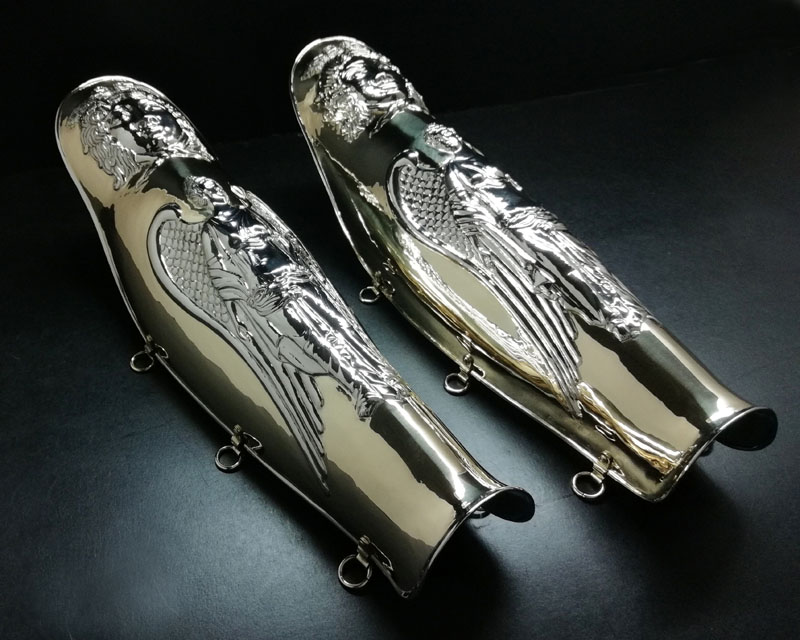
Embossed iron with decorative brass rivits. Made in the EEC, on measurments. See our measurement chart.
|
|
Heigth 40cm, 500g each |
|
These are typical
for the IIId cent AD, when the roman cavalry used to train with a rich
decorated equipement. |
|
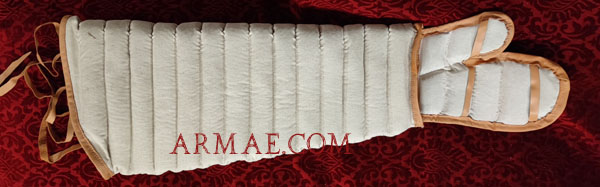
Any metallic body armor may be extremely inconfortable to suport, unless you wear a padded clothing undernath. Raomn soldiers were no exception, and used a special cloth as protection, called subarmalis, and thoracomachus at the end of the empire. This reproduction is made of padded cotton fabric.
|
|
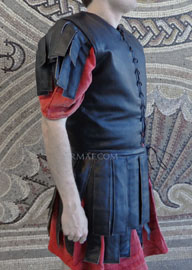
This is another kind of subarmalis, made of leather and with richly ornamented "Pteruges".
|